







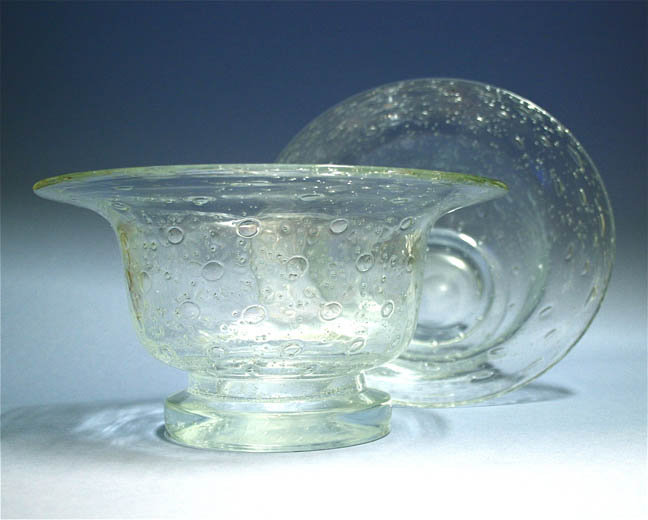
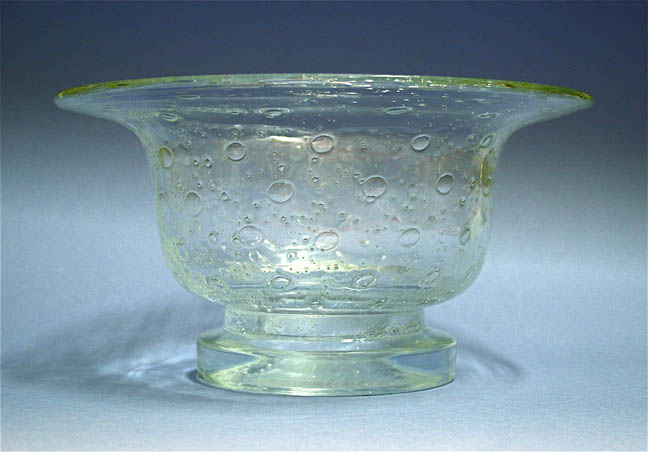
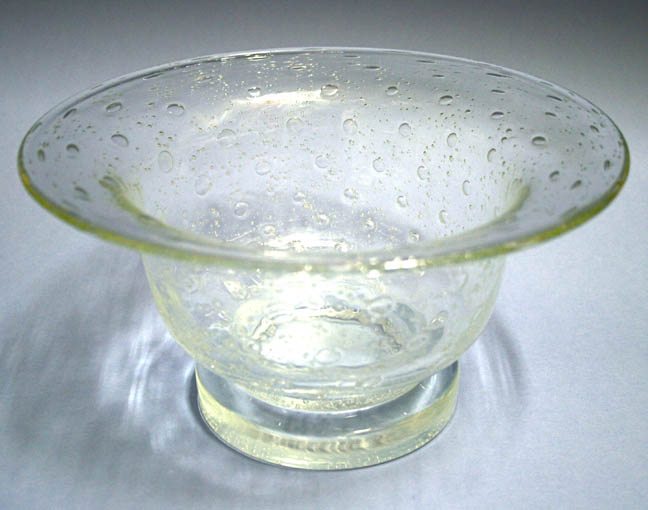
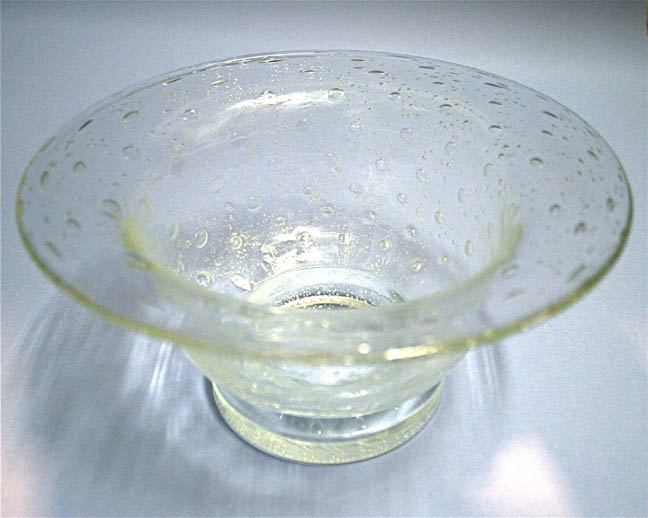
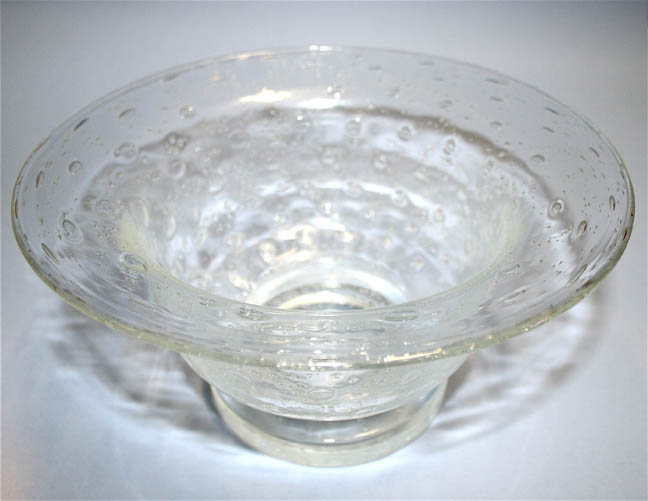
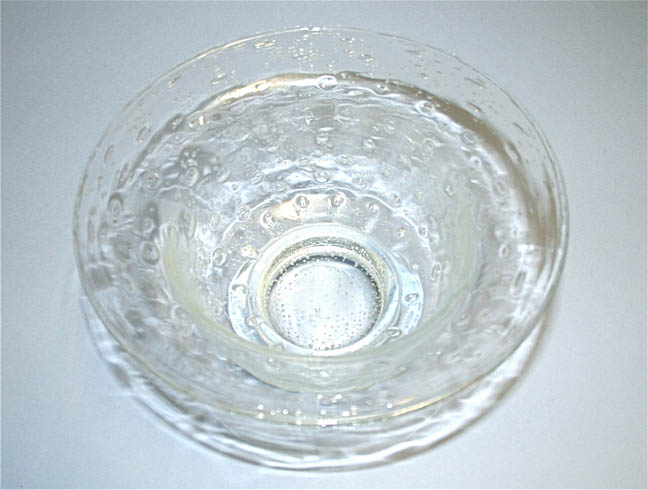
Title: 19th Century Large Hand-Blown Clear Bubble Venetian Glass (Pair)
Catalog Number: 891
Category: Glass / Blown
Artist:
Country & Origin:
Historical Period: Unassigned
Approximate Date:
Signature: Unsigned
Condition: Museum Quality
Size:
Height: 4 1/4 inches
Width: 8 inches
Depth: 8 inches
Weight: 1lb. 13.6 oz. each
Description & Provenance: A pair of large 19th Century hand-blown clear bubble glass bowls. These rare Italian art glass bowls have a controlled bubble design. They are made by an anonymous old Italian studio. The hand blown glass is very heavy, with the typical Italian look and a very light tinge of clear blue. Unsigned. *Our job is to find and target great art by collecting a vast array of contemporary, vintage, antique and collectible items from across the globe. Individually handcrafted, we breathe new life into these forgotten relics by giving back each piece it's unique story. We welcome dealers, galleries, and private collectors to register securely and buy and sell with us.
Origin, Encyclopedia & Researched Articles:
Encyclopedia Name: http://en.wikipedia.org/wiki/Venetian_glass
Murano�s reputation as a center for glassmaking was born when the Venetian Republic, fearing fire and destruction to the city�s mostly wood buildings, ordered glassmakers to move their foundries to Murano in 1291. Murano glass is still interwoven with Venetian glass. Murano's glassmakers were soon the island�s most prominent citizens. By the 14th century, glass makers were allowed to wear swords, enjoyed immunity from prosecution by the Venetian state and found their daughters married into Venice�s most affluent families. Of course there was a catch: Glassmakers weren't allowed to leave the Republic. However, many craftsmen took this risk and set up glass furnaces in surrounding cities and as far afield as England and the Netherlands. Murano�s glassmakers held a monopoly on quality glassmaking for centuries, developing or refining many technologies including crystalline glass, enameled glass (smalto), glass with threads of gold (aventurine), multicolored glass (millefiori), milk glass (lattimo), and imitation gemstones made of glass. Today, the artisans of Murano are still employing these century-old techniques, crafting everything from contemporary art glass and glass jewelry to murano glass chandeliers and wine stoppers.
Verbal History:
Today, Murano is home to the Museo Vetrario or Glass Museum in the Palazzo Giustinian, which holds displays on the history of glassmaking as well as glass samples ranging from Egyptian times through the present day. The process of making Murano glass is rather complex. Most Murano glass art is made using the lamp-working technique. Glass is made from silica which forms a liquid at high temperatures. As the molten glass cools to become a solid, there is an interval when the glass is able to be shaped by the glassmaker. This stage in production is when the glassmaker can express his design style and artistic skill.


Comments are subject to review
Be the first to comment!