

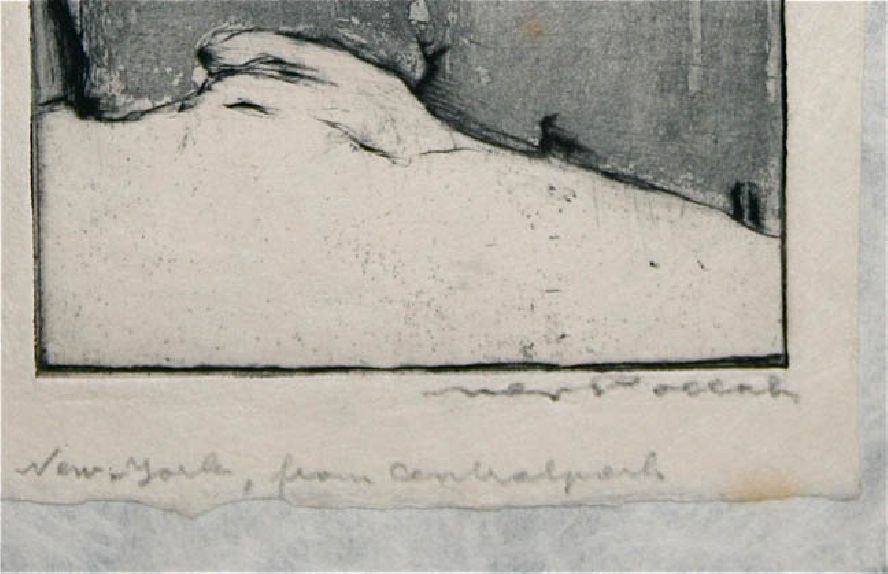
Title: little Lithograph Art Print Of New York Snow 1943
Shipping: $9.00
Artist: N/A
Period: 20th Century
History: N/A
Origin: North America > United States
Condition: Excellent
Item Date: 1943
Item ID: 2310
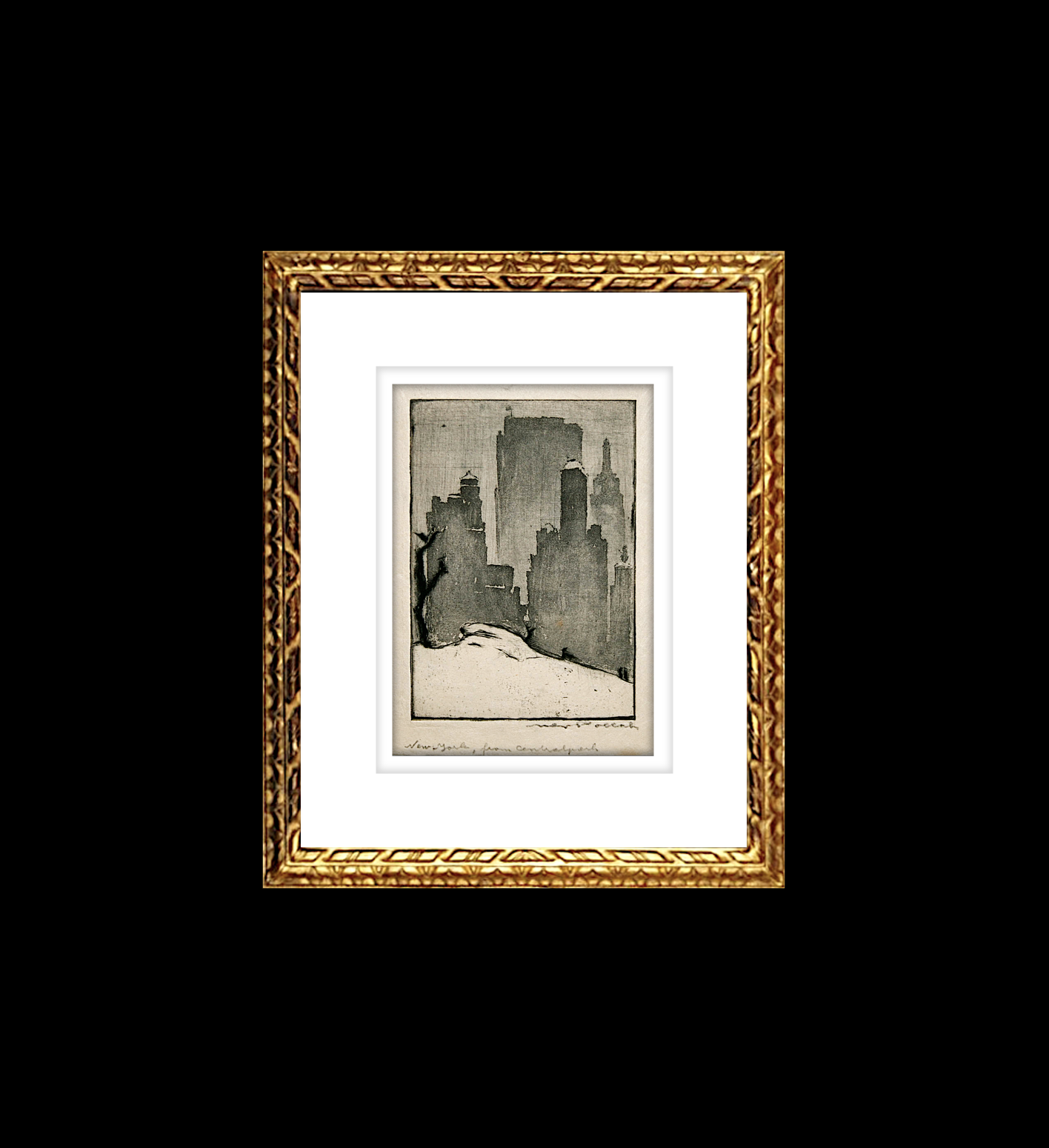
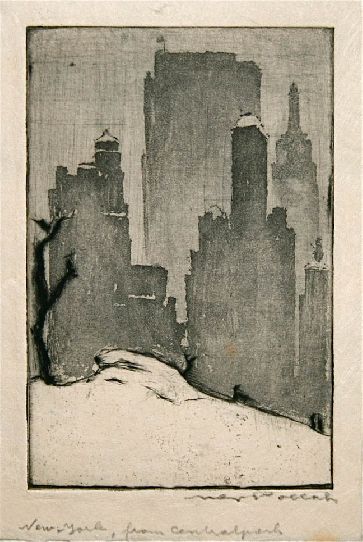
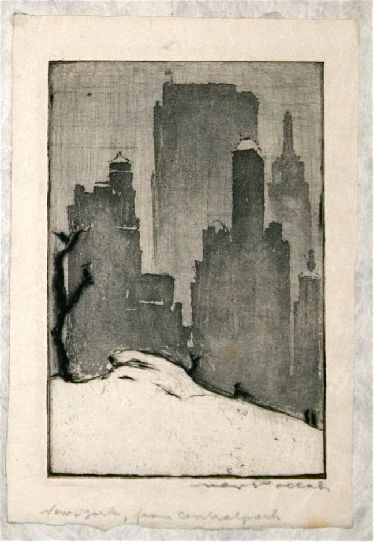
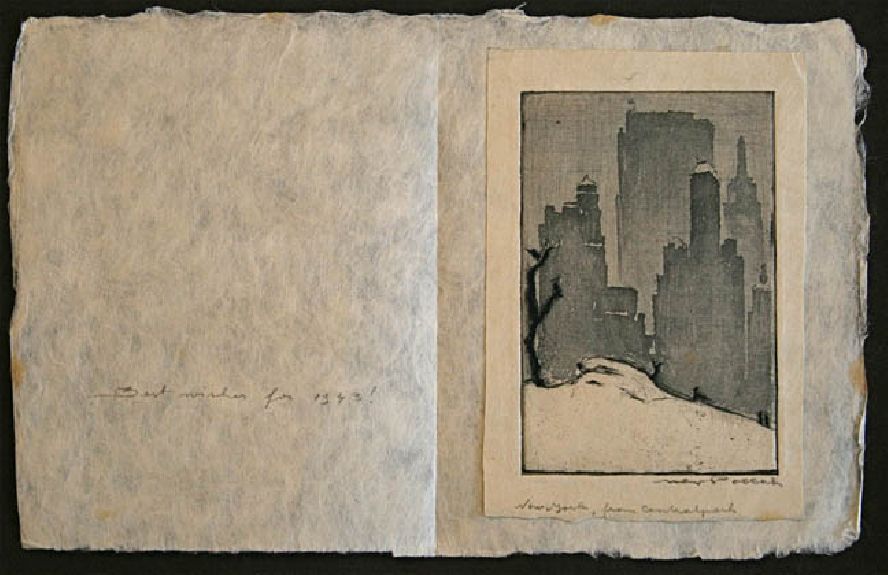
FOR ALL YOU NEW YORK CITY LOVERS! This mid-20th-century lithograph captures a romantic, quiet, and peaceful New York City in 1943, just after a snowstorm in Central Park. The print presents a serene winter scene, with snow-covered grounds and the city’s iconic buildings visible on the horizon. Its Art Deco architecture is beautifully rendered, evoking a nostalgic, timeless view of the city as it once appeared. This charming lithograph conveys a sense of tranquility and romance, perfectly capturing the mood of Central Park on a snowy day. The work is signed and exudes a serene, contemplative atmosphere. In 1943, New York was emerging as a major center of artistic innovation, partly fueled by the migration of European artists fleeing the turmoil of World War II. Art in the city reflected a mix of realism, romantic nostalgia, and the beginnings of modernist abstraction, capturing both the anxieties of the era and a yearning for stability and beauty. Lithographs, prints, and urban landscapes offered accessible glimpses of everyday life, often emphasizing mood, atmosphere, and architectural elegance. Prominent artists active in New York at the time included the abstract expressionist pioneers Arshile Gorky and Willem de Kooning, the surrealist Max Ernst, and American scene painters like Edward Hopper, whose work depicted urban and domestic settings with quiet intensity. These artists, among others, shaped the city’s cultural identity, bridging European avant-garde ideas with uniquely American sensibilities and setting the stage for New York’s postwar emergence as a global art capital.
The year 1943 was a pivotal moment in art history, marked by the tensions and transformations of World War II. Artists responded to the global conflict in diverse ways—some depicting the harsh realities of war, others seeking solace in abstraction, romanticism, or nostalgic imagery. In the United States, the war effort and the social climate influenced both subject matter and style, with a growing interest in urban scenes, everyday life, and American landscapes as a form of reassurance and cultural identity. Lithography and printmaking remained popular, allowing artists to reproduce works more widely for the public, often emphasizing clarity, design, and emotional resonance. At the same time, modernist movements such as Surrealism and early Abstract Expressionism continued to gain momentum, reflecting the anxieties, hopes, and imaginative exploration of a world in turmoil.
Link: http://en.wikipedia.org/wiki/Engraving
Engraving is the practice of incising a design onto a hard, flat surface, by cutting grooves into it. The result may be a decorated object in itself, as when silver, gold or steel are engraved, or may provide an intaglio printing plate, of copper or another metal, for printing images on paper, which are called engravings. Engraving was a historically important method of producing images on paper, both in artistic printmaking, and also for commercial reproductions and illustrations for books and magazines. It has long been replaced by photography in its commercial applications and, partly because of the difficulty of learning the technique, is much less common in printmaking, where it has been largely replaced by etching and other techniques. Other terms often used for engravings are copper-plate engraving and Line engraving. These should all mean exactly the same, but especially in the past were often used very loosely to cover several printmaking techniques, so that many so-called engravings were in fact produced by totally different techniques, such as etching.