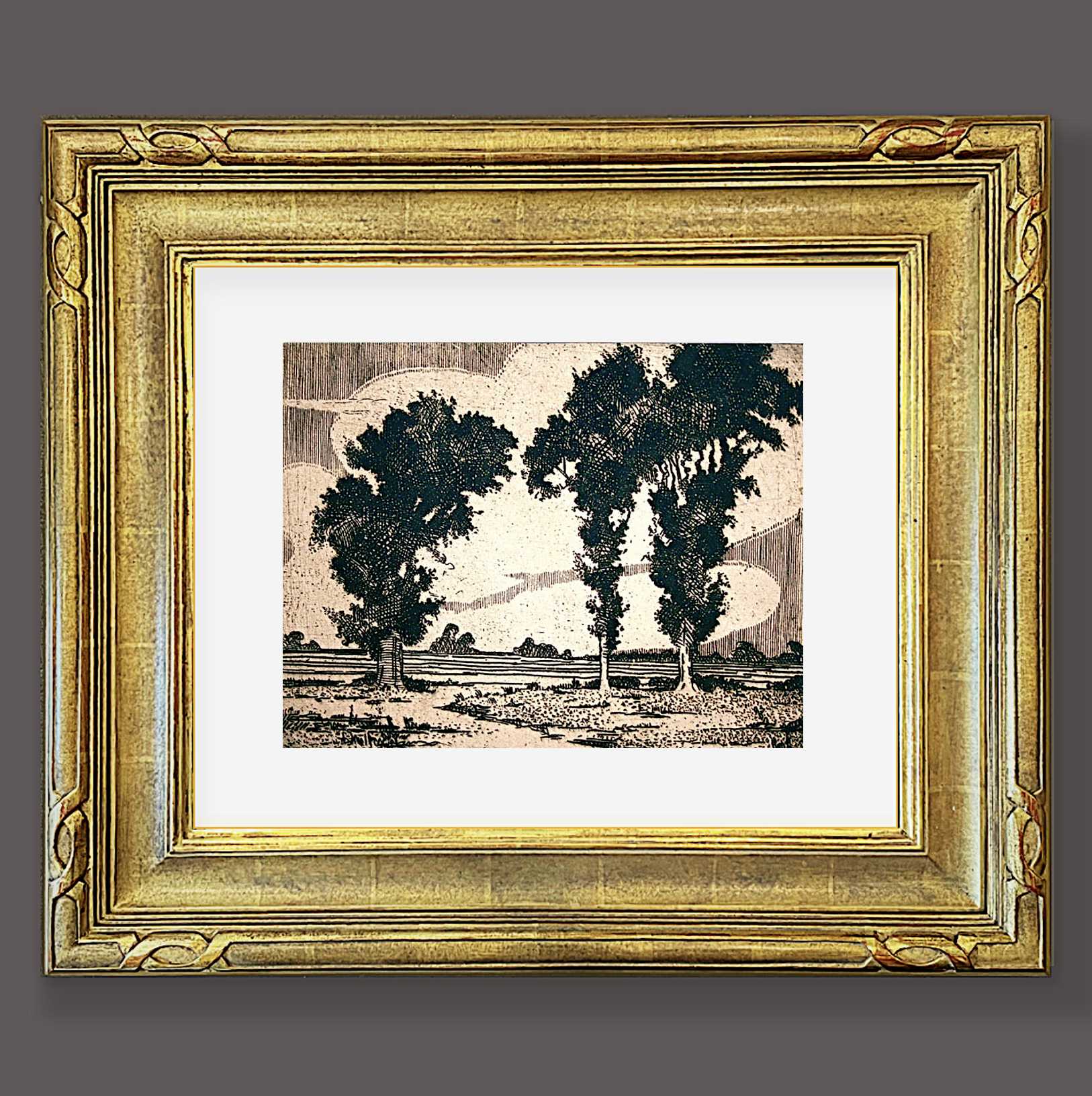


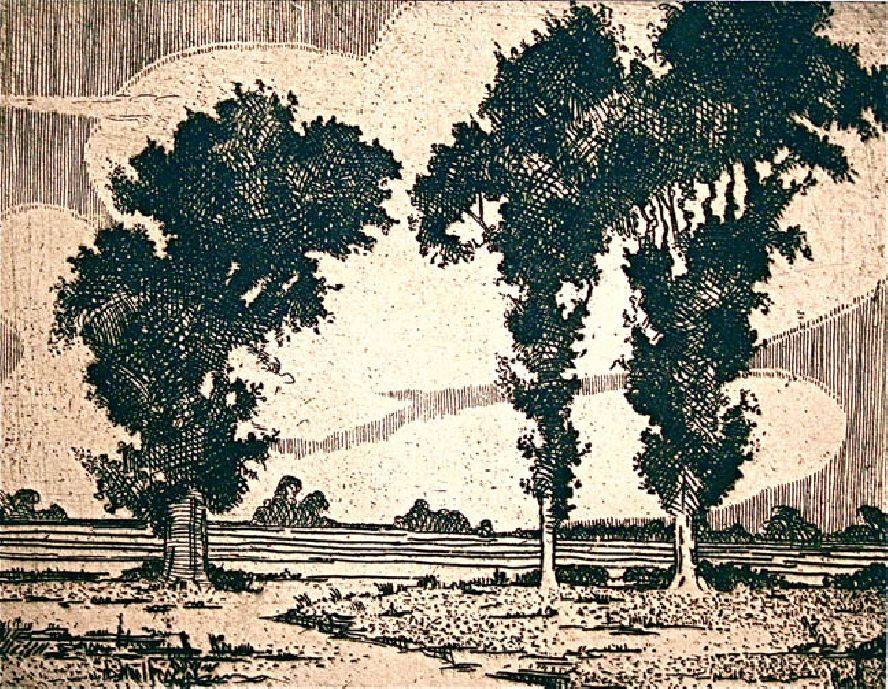
Title: Antique Metal Engraving Landscape Print of Three Large Trees
Shipping: $29.00
Artist: N/A
Period: 19th Century
History: Art
Origin: North America > United States
Condition: Excellent
Item Date: N/A
Item ID: 693
Spectacular Original Antique Landscape Print (c. 1900) This beautiful, framed black-and-white landscape print from around 1900 is a striking example of Art Deco work on paper. Such antique prints look stunning when arranged in a montage on a decorative wall, bringing sophistication, style, and visual interest to any room. The print is a metal engraving—sometimes referred to as an etching—depicting a serene landscape with three large trees. The image was created from a flat metal plate, typically made of copper, steel, or zinc, which served as the matrix for the print. Each line was carefully incised into the plate, producing the rich detail and texture that make this piece a timeless work of art. In the early 1900s through the 1920s, a growing market for affordable art emerged as middle-class homes sought to bring beauty and sophistication into everyday living spaces. Artists began producing small-scale landscape prints, etchings, and engravings specifically for domestic display, offering elegant scenes of nature, architecture, and idyllic countryside views. These works were often reproduced in editions, allowing artists to sell them at accessible prices while earning extra income beyond commissions or gallery sales. This practice not only helped artists support themselves financially but also democratized art ownership, making it possible for the general public to enjoy finely crafted prints that reflected contemporary taste and decorative trends. The result was a vibrant period in which technically skilled and visually appealing works on paper became a staple of home décor, blending artistic merit with everyday accessibility.
Decorative Use of Antique Prints for Wall Montages: Arranging antique prints in a wall montage is a timeless way to bring elegance, character, and visual interest to any interior space. A curated collection of landscapes, architectural studies, or figurative prints can transform a blank wall into a gallery-like display, creating depth, texture, and a sense of history. When thoughtfully framed and grouped, these prints complement one another while allowing each piece to shine, enhancing the room’s sophistication and style. Whether displayed symmetrically or in a more eclectic, layered arrangement, antique prints infuse a space with charm and refined taste, turning ordinary walls into a conversation-worthy focal point that reflects both personality and an appreciation for art.
Link: http://en.wikipedia.org/wiki/Engraving
Engraving is the practice of incising a design onto a hard, flat surface, by cutting grooves into it. The result may be a decorated object in itself, as when silver, gold or steel are engraved, or may provide an intaglio printing plate, of copper or another metal, for printing images on paper, which are called engravings. Engraving was a historically important method of producing images on paper, both in artistic printmaking, and also for commercial reproductions and illustrations for books and magazines. It has long been replaced by photography in its commercial applications and, partly because of the difficulty of learning the technique, is much less common in printmaking, where it has been largely replaced by etching and other techniques. Other terms often used for engravings are copper-plate engraving and Line engraving. These should all mean exactly the same, but especially in the past were often used very loosely to cover several printmaking techniques, so that many so-called engravings were in fact produced by totally different techniques, such as etching.<br />