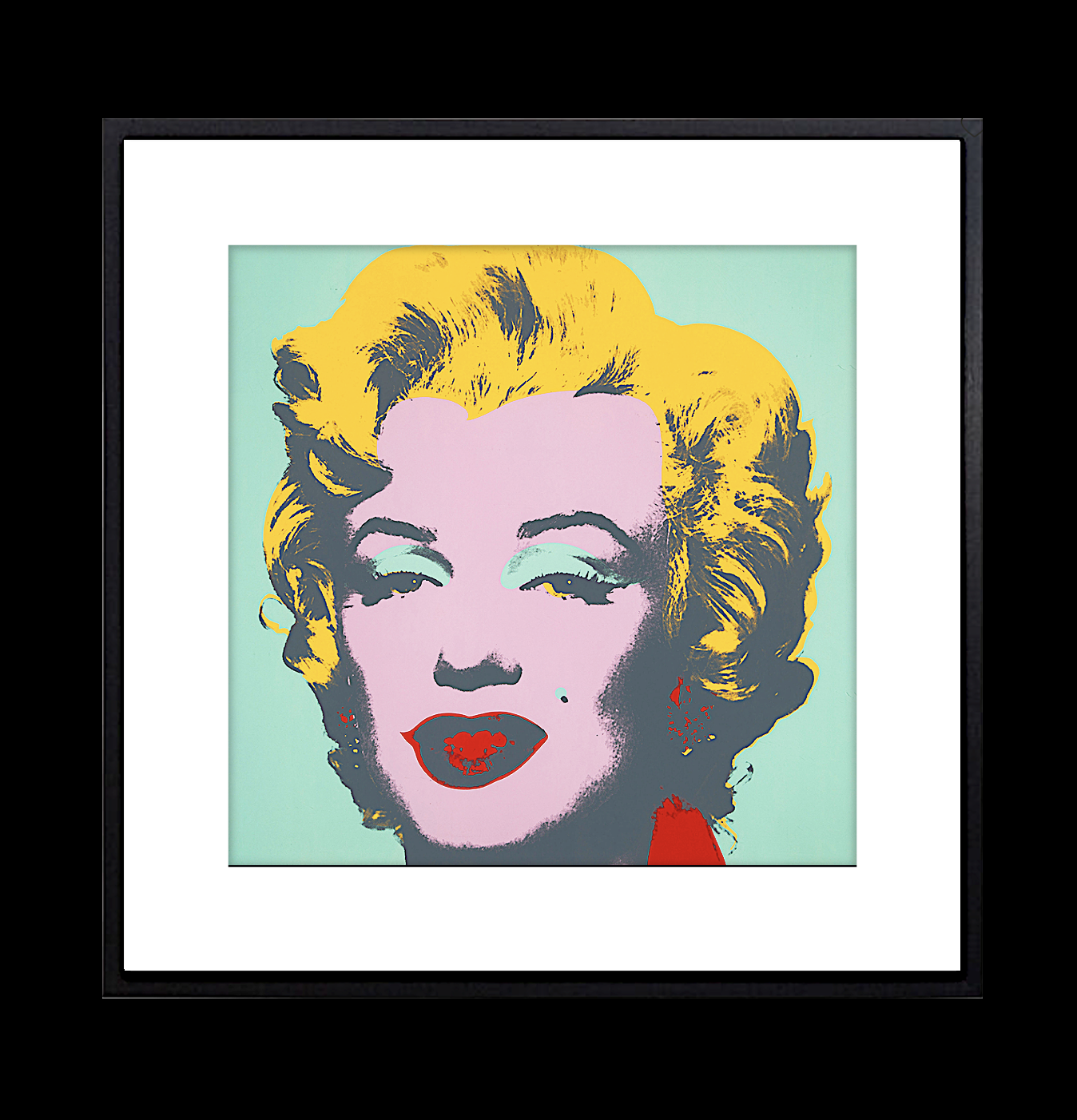


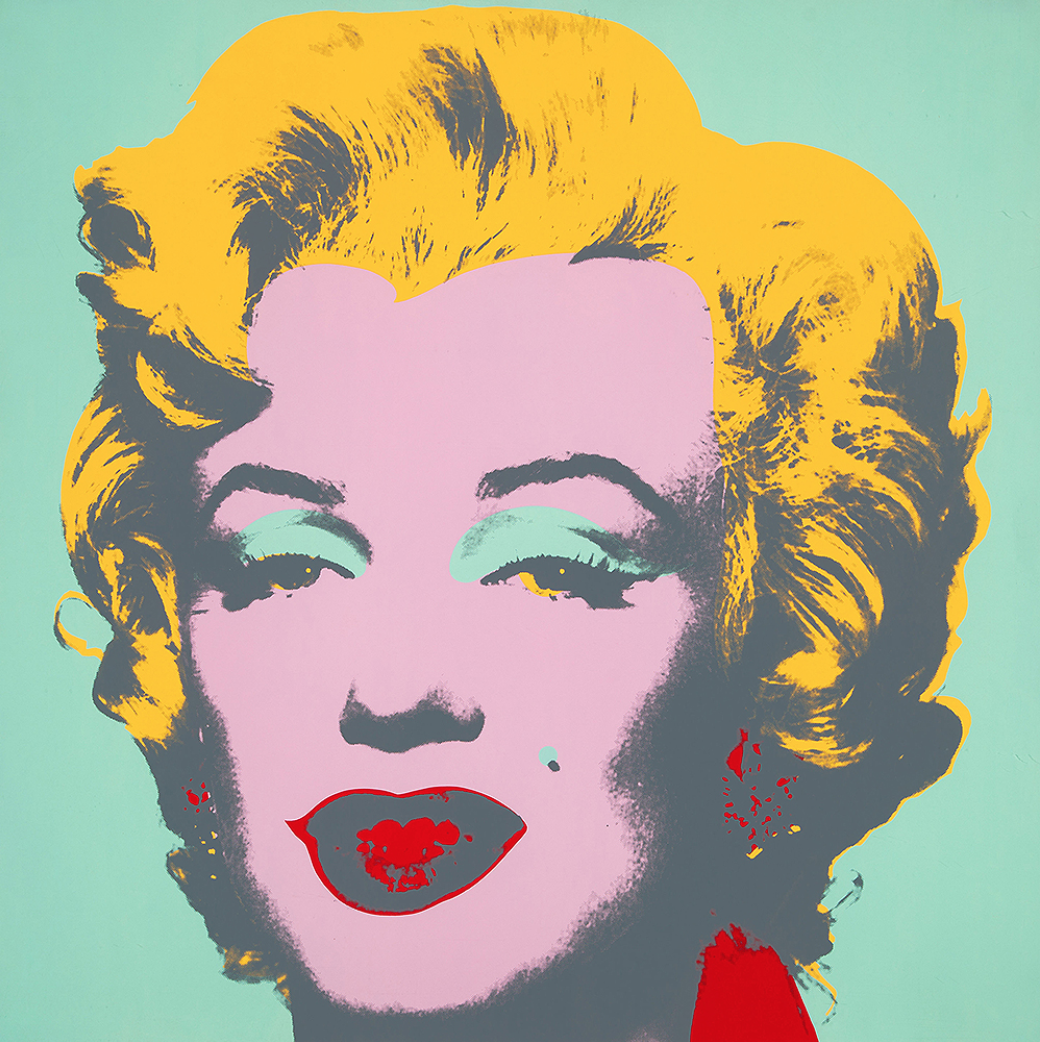
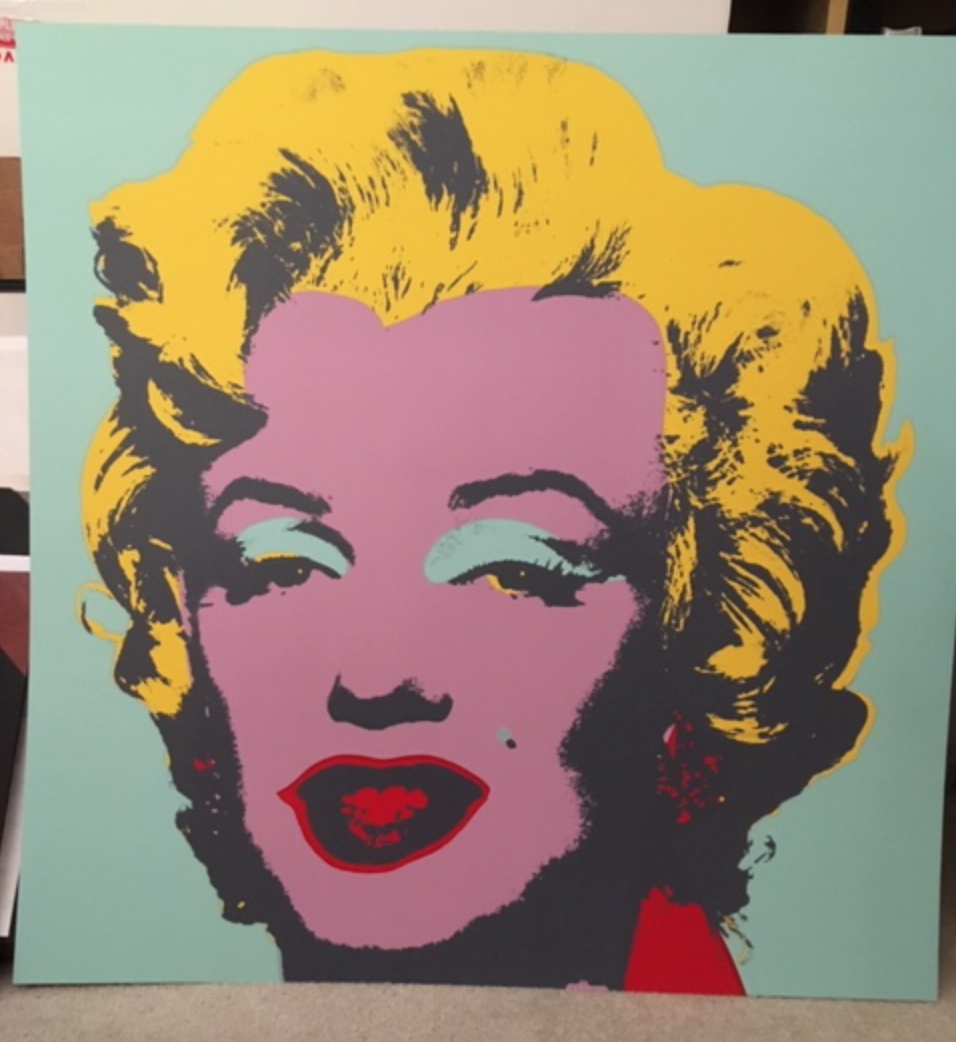
Title: Andy Warhol, Marilyn Monroe (Marilyn) 1967 Original Print
Shipping: $29.00
Artist: N/A
Period: N/A
History: N/A
Origin: North America > United States
Condition: N/A
Item Date: N/A
Item ID: 90
Andy Warhol, Marilyn Monroe (Marilyn), 1967. From the original silkscreens, European edition In 1967, Andy Warhol created one of his most iconic bodies of work: a portfolio of ten screenprint portraits of Marilyn Monroe, each featuring the same image rendered in different color combinations. The image was based on a single publicity photograph from the 1953 film Niagara and was completed in the weeks following Monroe’s death in August 1962. The series is widely interpreted as a meditation on fame, repetition, beauty, and mortality. The original Marilyn portfolio was printed by Aetna Silkscreen Products Inc., New York, on museum board and published by Factory Additions. The edition consisted of 250 sets, measuring approximately 36 x 36 inches (91 x 91 cm). Most prints from this first edition were signed and numbered—some in pencil, some in pen, others initialed or dated on the verso. In addition, 26 complete Artist’s Proof portfolios were produced, signed and lettered A–Z. The first edition was an immediate success, and demand for additional prints grew quickly. However, Warhol’s dealer, Leo Castelli, strongly advised him not to sign or authorize further editions, warning that doing so would devalue the existing works. Following this advice, Warhol distanced himself from the production of subsequent editions and declined to participate in new printings. During the 1970s, while Warhol was working with German and Belgian printers for European exhibitions, a proposal emerged to produce a European edition of the Marilyn and Flowers series. Although Warhol initially appeared open to the idea, he ultimately refused to authorize or assist with the project. Despite this, the original screens were brought to Europe, and an unauthorized edition of 250 prints was produced in slightly different color variations from the original portfolio. These unauthorized prints were published by Sunday B. Morning and stamped on the verso in black ink with the phrases “Published by Sunday B. Morning” and “Fill in Your Own Signature.” Warhol was fully aware of these European editions and, while he did not formally authorize them, he eventually came to accept their existence. In some instances, he inscribed prints with the phrase, “This is not by me,” acknowledging the ambiguity of their status. The publishers were close friends of Warhol, which further complicated the situation. Due to the popularity of the first unauthorized edition, Sunday B. Morning continued publishing Marilyn prints. Later editions were printed in the original color schemes, were not numbered or signed, and were stamped in blue ink on the verso to distinguish them from earlier versions. Today, these European editions are widely known as part of the Marilyn series and remain highly sought after by collectors. The Marilyn Monroe portfolio has been recognized as one of the most influential works of modern art; in a December 2, 2004 article, The Guardian ranked it the third most influential artwork of the modern era based on a survey of artists, critics, and historians. Complete original portfolios have achieved prices exceeding $1.5 million. This work exemplifies Warhol’s ability to merge avant-garde concepts with mass-media imagery, cementing his role as one of the most prolific and influential artists of the 20th century.
Andy Warhol and Marilyn Monroe. Warhol. Monroe. When these names are spoken, a single iconic image immediately comes to mind. One photograph of Marilyn Monroe was enough for Andy Warhol to create a legendary series of Pop Art portraits—works that have long outlived both the artist and the actress. Warhol began producing his Marilyn portraits shortly after Monroe’s death in 1962. His decision to appropriate a publicity photograph as the foundation of the series sparked controversy and raised questions about how far an artist can borrow a ready-made image before it becomes a legal or ethical issue. Over the decades, these screenprints have achieved immense notoriety, leading many to suggest that Warhol created “an icon out of an icon,” extending Monroe’s celebrity far beyond the famously predicted “15 minutes of fame.” Today, the Marilyn image is considered one of the most influential works of modern art. Rather than drawing or painting Monroe from life, Warhol deliberately chose a photograph he knew would be instantly recognizable to almost anyone. Marilyn Monroe embodied celebrity, glamour, and the notion of the modern sex symbol. Featuring famous figures became a defining characteristic of Pop Art in the 1960s, serving as an ironic commentary on mass media’s obsession with fame and image. In 1962, Warhol became fascinated with photographic silkscreen printing, a technique that would define his artistic style. The process was fast, repeatable, and allowed for subtle variations in color and composition, enabling Warhol to reproduce the same image again and again. Almost coincidentally, Monroe became the subject of one of his earliest—and ultimately most famous—Pop Art works. Her death that same year gave the image an added poignancy, while her beauty and fame provided the perfect foundation for Warhol’s repetitive, graphic, and almost cartoon-like aesthetic. Although Warhol is inseparable from Pop Art today, the movement itself predated his involvement, emerging in mid-1950s Britain. It is also easy to forget that before his rise as a Pop Art icon, Warhol was a highly successful commercial illustrator. During the 1950s, he worked for major clients including Vogue, Glamour, and Tiffany & Co. Yet Warhol and Pop Art ultimately came to define one another, becoming virtually synonymous in the public imagination. Art historians and critics continue to debate the symbolism embedded in the Marilyn series: the meaning behind Warhol’s color choices, his compositions, and the broader message he may have intended to convey. Warhol himself, however, insisted on his transparency. “If you want to know all about Andy Warhol, just look at the surface of my paintings and films and me, and there I am. There’s nothing behind it,” he once remarked. While he often denied emotional depth or hidden meaning, it is undeniable that the Marilyn series was carefully considered. Regardless of interpretation, the image of Marilyn endures—an eternal emblem of Pop Art and its cultural impact. Warhol’s enigmatic personal life has also been the subject of much speculation. He was widely believed to be gay, and his work frequently incorporated homoerotic imagery and themes. Yet Warhol himself claimed that he remained a virgin throughout his life, further adding to the mystery that continues to surround both the artist and his art.
Link: http://en.wikipedia.org/wiki/Andy_Warhol.
Andy Warhol (August 6, 1928 – February 22, 1987) was a leading figure in the visual art movement known as pop art. After a successful career as a commercial illustrator, Warhol became a renowned and sometimes controversial artist. His works explore the relationship between artistic expression, celebrity culture and advertisement. He worked in a range of media, including painting, printmaking, sculpture, film, and music. He founded Interview Magazine and was the author of numerous books, including The Philosophy of Andy Warhol and Popism: The Warhol Sixties. Andy Warhol is also notable as a gay man who lived openly as such before the gay liberation movement. His studio, The Factory, was a famous gathering place that brought together distinguished intellectuals, drag queens, playwrights, Bohemian street people, Hollywood celebrities, and wealthy patrons.
Warhol has been the subject of numerous retrospective exhibitions, books, and feature and documentary films. He coined the widely used expression "15 minutes of fame". In his hometown of Pittsburgh, Pennsylvania, The Andy Warhol Museum celebrates his life and work.
The highest price ever paid for a Warhol painting is US$100 million for a 1963 canvas titled Eight Elvises. The private transaction was reported in a 2009 article in The Economist, which described Warhol as the "bellwether of the art market". $100 million is a benchmark price that only Jackson Pollock, Pablo Picasso, Vincent van Gogh, Pierre–August Renoir, Gustav Klimt and Willem de Kooning have achieved.