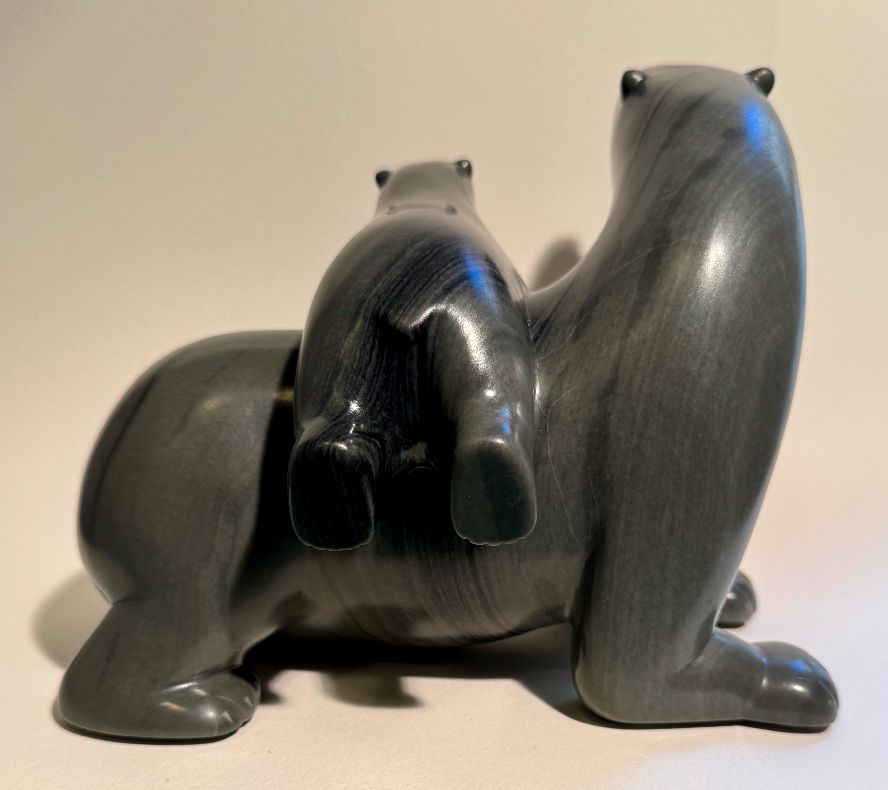








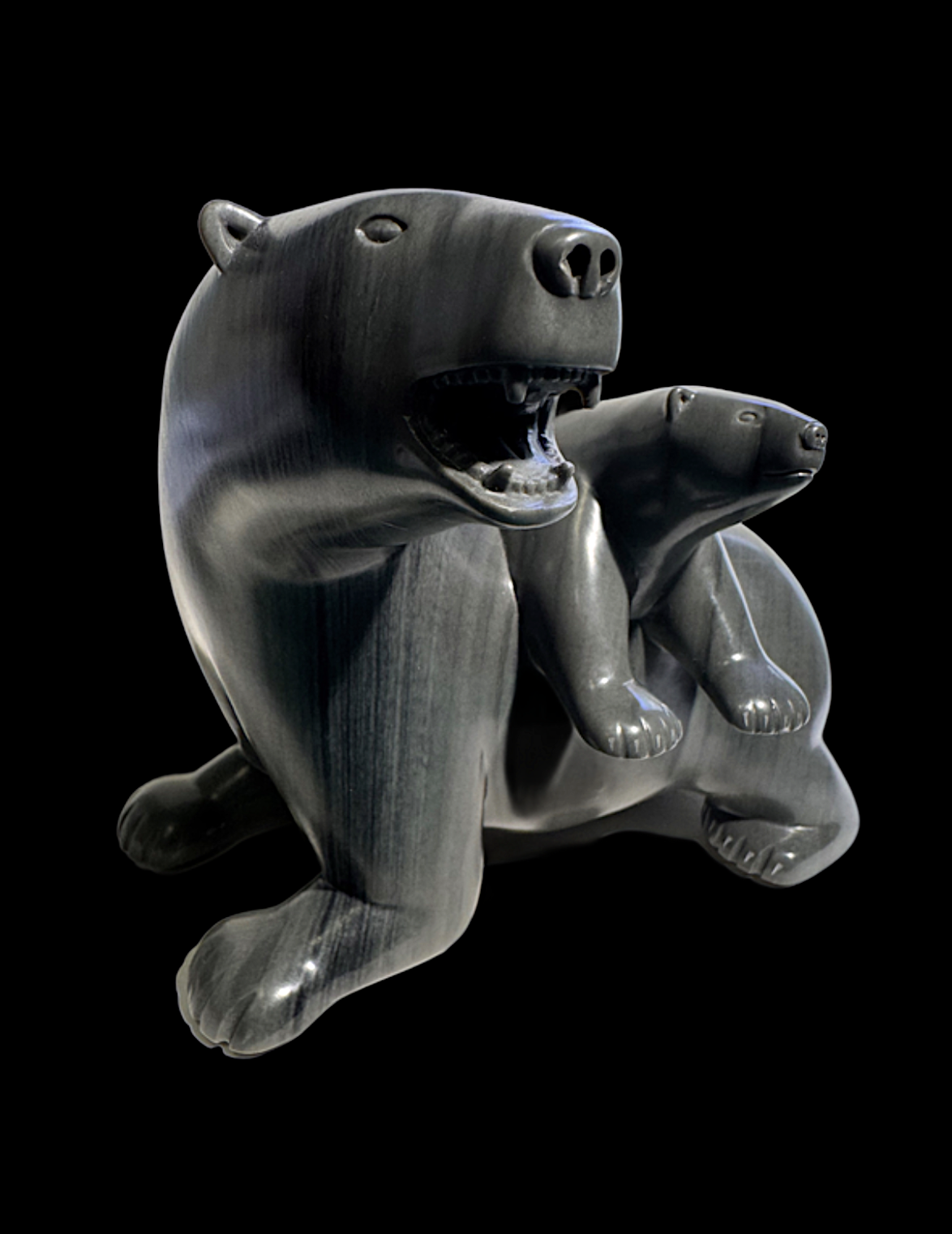
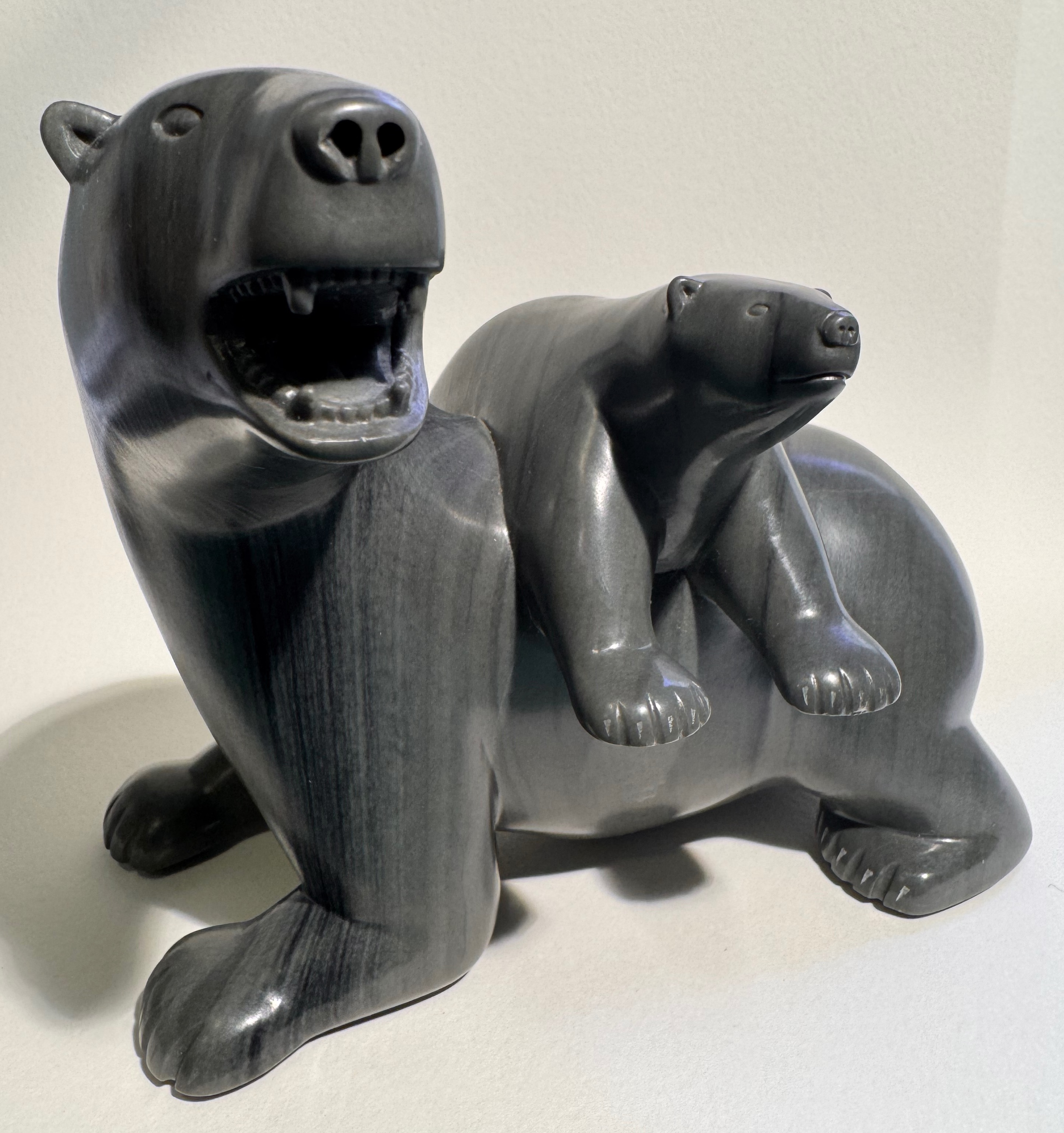
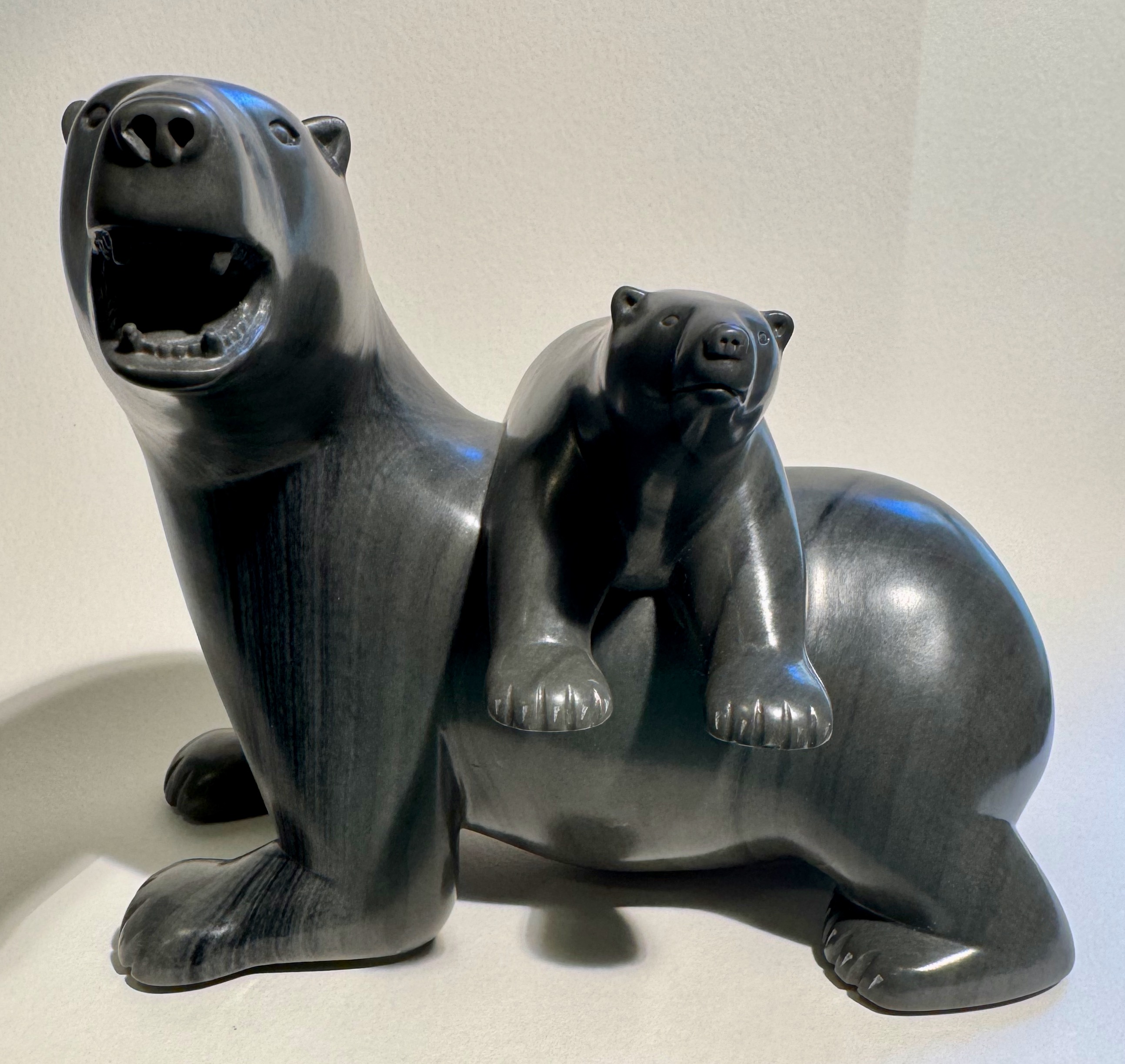
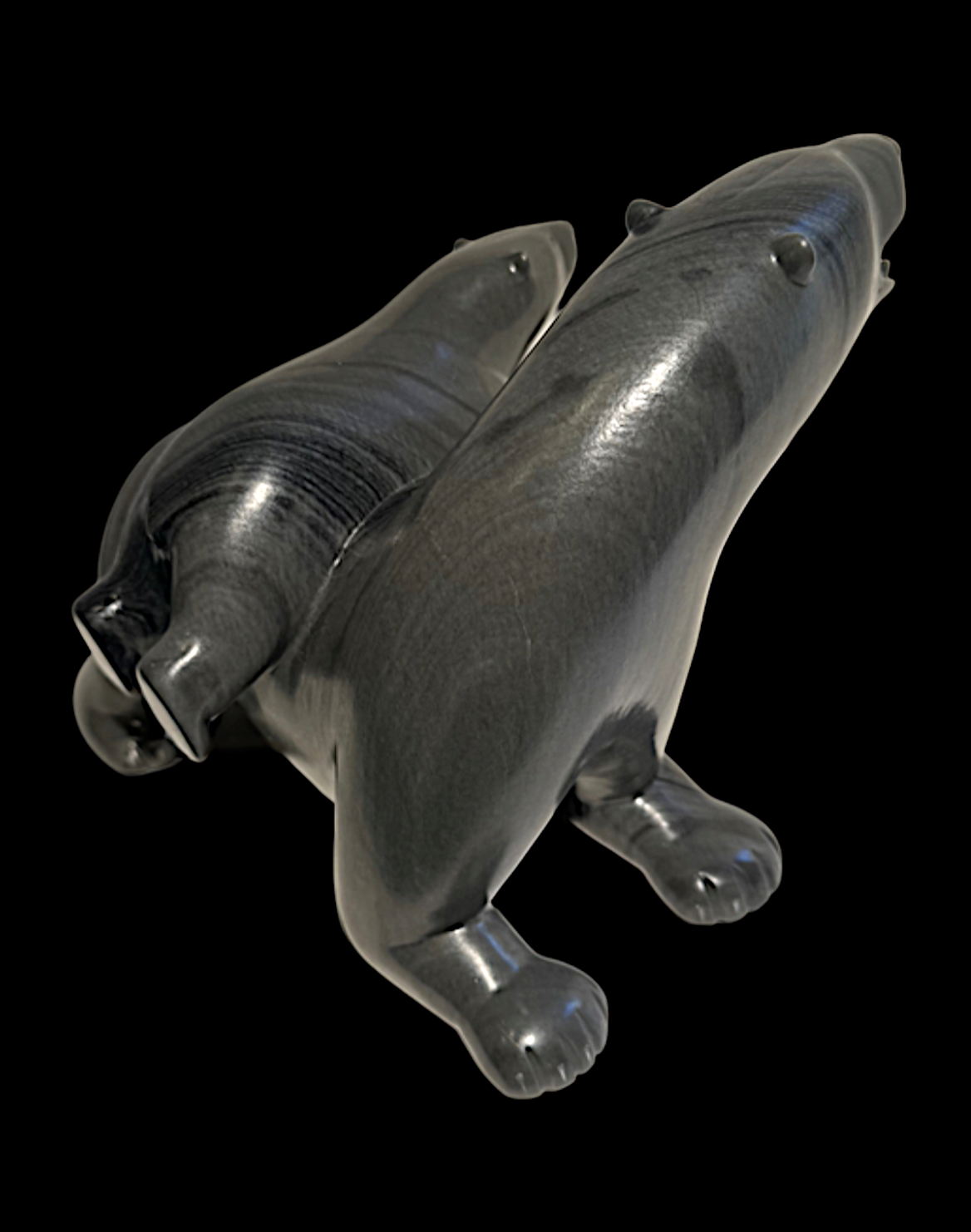
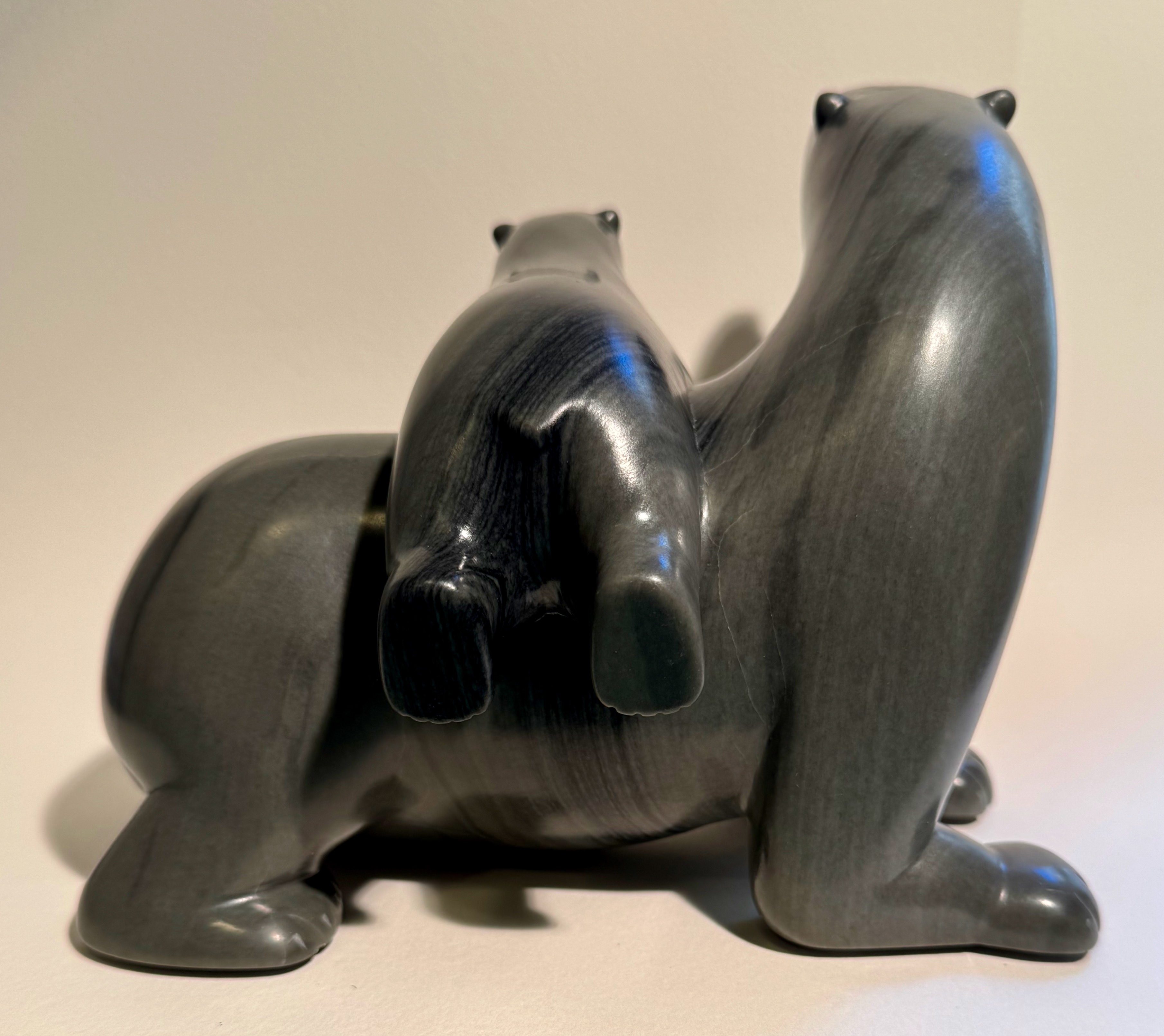
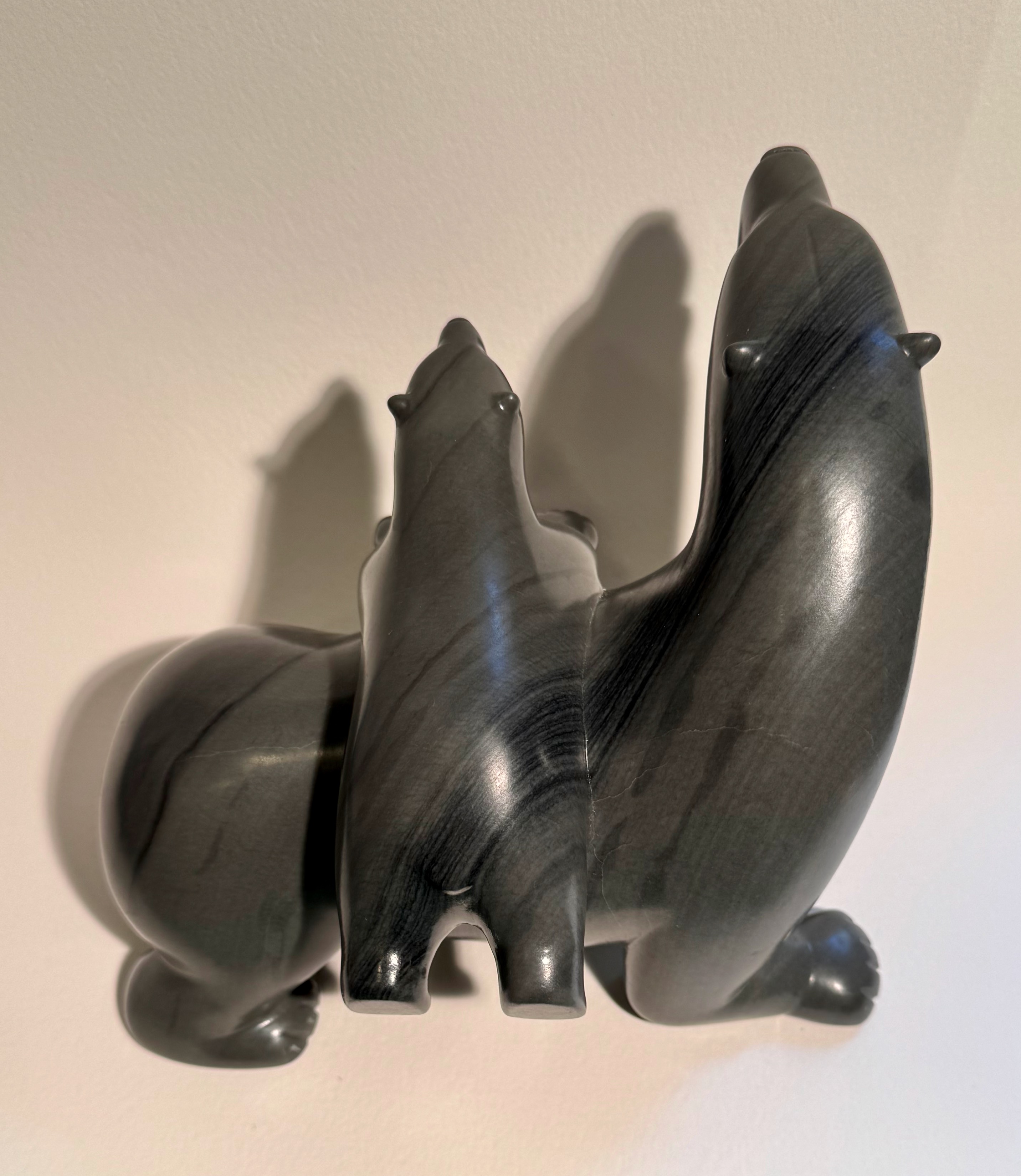
Title: Arctic Inuit Polar Bear And Cub Stone Carving Sculpture
Catalog Number: 4214
Category: Stone / Animals
Artist:
Country & Origin: North America > Canada
Historical Period: 20th Century
Approximate Date:
Signature: Signed
Condition: Excellent
Size:
Height:
Width:
Depth:
Weight:
Description & Provenance: This striking, large tribal stone carving depicts a polar bear with its cub, masterfully created by Inuit artists of the Canadian Arctic. Works of polar bear art from the Far North carry deep cultural meaning while also drawing attention to the growing environmental threats these magnificent animals face. As climate change continues to endanger their survival, sculptures such as this remind us of our shared responsibility to raise awareness and take action. The sculpture is made of gray slate stone and measures approximately 7 × 6 inches. It is signed by the artist. The Inuit—meaning “the People” in the Inuktitut language—live across the northernmost regions of North America, from Alaska in the west, across the Canadian Arctic coastline and islands, to Greenland in the east. Today, approximately 65,000 Inuit live within Canada. Inuit art is as diverse as the vast land and sea that sustain their way of life. Each piece is shaped by tradition, environment, and the natural materials available in the Arctic, resulting in works that are both culturally rich and visually powerful. In Arctic tradition, the creation of sculpture is deeply spiritual, beginning with the careful “choosing” of the stone, which many Inuit artists believe already holds the spirit of the form within it. The artist’s role is not to invent the image, but to release it from the stone through carving, guided by intuition, respect for nature, and ancestral knowledge. Materials such as slate, serpentine, and soapstone are selected not only for their workability, but for their spiritual connection to the land. Within this tradition, the polar bear is one of the most powerful symbols in Arctic culture, representing strength, survival, leadership, and the sacred balance between humans and nature. When depicted with a cub, the symbolism deepens to include protection, maternal care, continuity of life, and the responsibility to safeguard future generations—both of the animal world and of the people themselves.
Origin, Encyclopedia & Researched Articles:
Verbal History:
Information:
Personal Story:
The history of Arctic art is deeply rooted in survival, storytelling, and spiritual tradition, developed over thousands of years by Indigenous peoples of the Far North, particularly the Inuit. Originally, Arctic art was created from necessity, using materials readily available in the environment—such as stone, bone, ivory, antler, and hides—to craft tools, clothing, and ceremonial objects. These functional items were often richly decorated with symbolic imagery representing animals, hunting life, spirits, and ancestral legends. In the mid-20th century, Arctic art gained international recognition as Inuit artists began creating sculptures, prints, and carvings specifically for the global art market, transforming ancient cultural expression into a respected contemporary art form. Today, Arctic art continues to evolve, balancing tradition with modern themes, while preserving the history, values, and environmental awareness of the people who call the Arctic home.


Comments are subject to review
Be the first to comment!